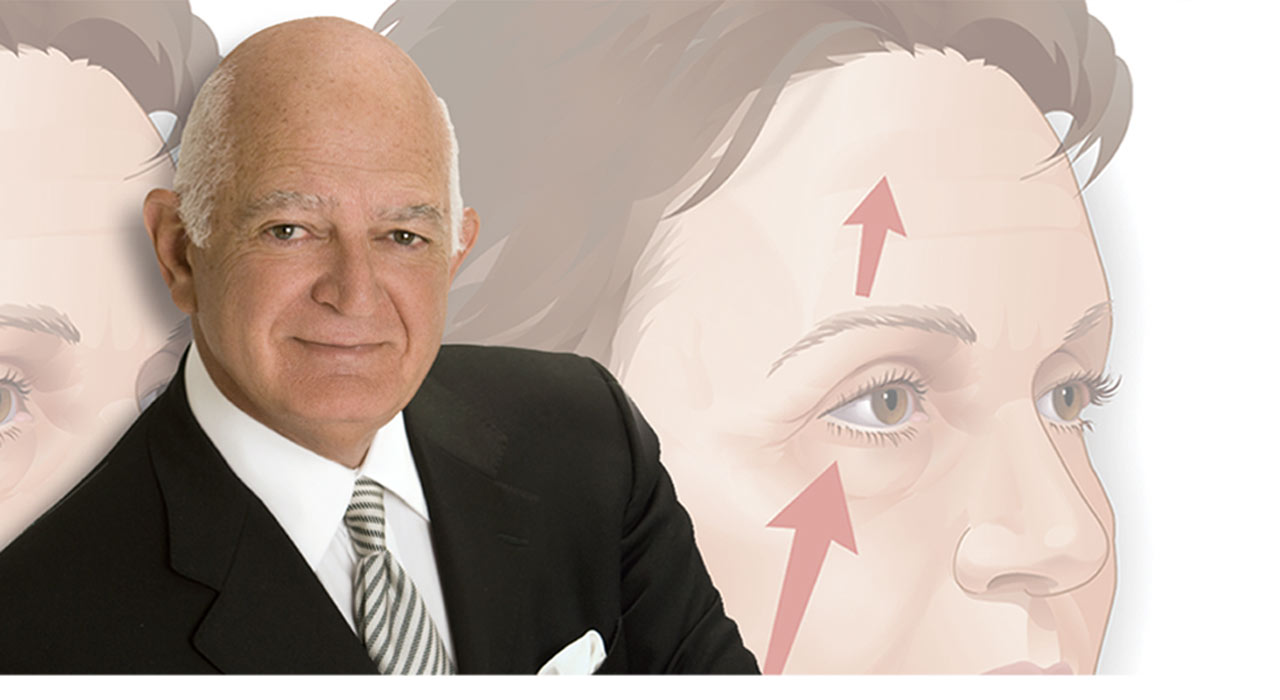
If you have had a facelift and are pleased with the results, wonderful!
But if you have had a facelift and are disappointed with the final result, know that you are not alone, and that something can be done.
If you are considering a facelift, but wonder “what went wrong” after seeing friends and celebrities who have gone through the surgery, you've come to the right place for answers.
I have spent most of my professional life developing the Composite Facelift, a facial rejuvenation operation to produce youthful anatomical changes without creating a facelifted look - the “stigma” of surgery.
What came as a pleasant surprise was that, for patients having a second or even third facelift, this same procedure can erase the unwanted signs of prior surgery.
- Sam T. Hamra, MD
Mouse-over to reveal the possibilites
A note about “The Composite Facelift” from Dr. Hamra:
The Composite Facelift is my contribution to facial harmony. It represents
the culmination of many years of attempting to turn the shortcomings of
traditional surgical rejuvenation procedures into better and better techniques.
Although other plastic surgeons laid the groundwork with their
own fine-tuning of existing procedures, I have had a single purpose in developing
this technique: to make sure that you can regain the facial harmony
of your youth and retain it long after your surgery. There are many
variations to this approach, either from surgeons who have learned my
technique or by others who share a similar goal and have developed their
own variations.
I refer to the Composite Facelift as done by me and
countless other surgeons around the world who have adopted this
method. It is not a secret operation, as I have published countless articles
in the plastic surgery journals, a book (Composite Rhytidectomy)
and have lectured in most countries of the world where cosmetic surgery
is performed. I emphasize that there are other techniques that may
work as well, but the goal in facial rejuvenation—truly youthful anatomy—
is universally understood and not debatable, and should be your goal regardless
of the technique used.
Site Map | Contact Us | Privacy
Copyright 2013 Sam T. Hamra, MD