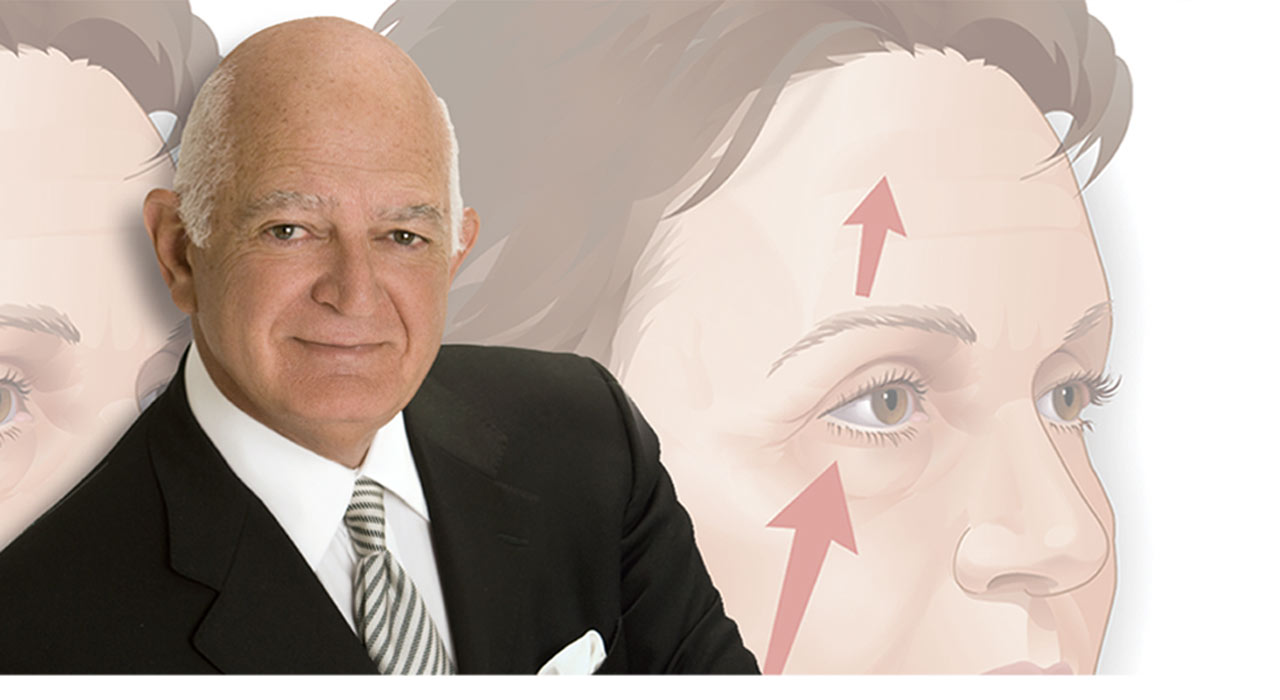
Comparing Techniques: The Direction of the Lift

Primary Composite Facelift

Today’s prevailing facelift surgery trend is to perform small facial rejuvenation procedures independently. While traditional facelift surgery may seem convenient because it results in minimal downtime, its weakness is that it fails to address the aging face as a whole. This can lead to a swept back, “facelifted” appearance and a hollow area below the eyes.

The Composite Facelift, developed by Dr. Sam Hamra, is an innovative approach to facial rejuvenation that addresses the problems associated with a conventional facelift. Unlike the traditional facelift, the Composite Facelift is ideal for restoring facial harmony to the entire face. Dr. Hamra combines his facelift techniques with a unique cosmetic eyelid surgery procedure to produce a more youthful appearance without the telltale signs of a traditional facelift.

Revision Facelift

If you’re looking to refresh a fading facelift or are unhappy with the results of previous facelift surgery, Dr. Hamra can perform a revision facelift. By utilizing innovative Composite Facelift techniques, he can correct the typical “facelifted” look and avoid problems associated with the conventional facelift. These problems include tension along the jaw line and mouth and a sunken, hollow appearance beneath the eyes.

For optimal results, Dr. Hamra combines the revision facelift with cosmetic eyelid surgery. The unique cosmetic eyelid surgery technique he uses helps to restore and reposition eye fat along the lower eyelid. Together, revision facelift surgery and cosmetic eyelid surgery can help recreate youthful contours and restore balance to a patient’s face.

The Traditional Facelift

The direction of lift in the traditional facelift is singular and lateral - toward the ear - as seen in the diagram above. This is the only direction of “pull.”

The Composite Facelift

The Composite Facelift direction of lift is toward the eye and ear - rather than just toward the ear. The movement of the cheek returns the eyelid muscle and cheek fat to their original positions, preventing the pull toward the ear. The forehead is lifted as well.

Comparing Techniques: The Eyelid Area

Cosmetic Eyelid Surgery Techniques for the Traditional Facelift

In traditional facelift surgery, cosmetic eyelid surgery is optional. When the procedure is performed, it typically involves removing the fat pads below the eyes without regard for possible long-term effects. Over time, fat removal can lead to a hollow appearance of the eyes.

Cosmetic Eyelid Surgery Techniques for the Composite Facelift

Lower eyelid surgery is an important component of the Composite Facelift. When performing this surgery, Dr. Hamra uses a special technique to preserve fat under the eyes and ensure that there is a natural transition between under-eye tissue and the cheekbone. This results in a smooth, youthful contour.

about Primary Facelift
about Facelift Revision